

 Energy relations between Iran and the Republic of Azerbaijan go back to the 1990s, after the collapse of the Soviet Union. Before Azerbaijan gained its independence, direct economic relations between the two were impossible. Once the leadership of Heyder Aliyev emerged as uncontested, however, the first energy agreement between the two countries was signed. Azerbaijan, with huge oil and gas reserves, began to present itself as a key ally in the European energy market, partly by retaining an interest in having a potential role in the southern gas corridor. At the same time, Iran — holding the largest natural-gas reserves in the world and the fourth-most-abundant proven oil reserves — has been planning to take its rightful share in the world energy market, primarily as a major natural-gas exporter.
The primary objective of the European Union is the diversification of energy resources. Thus, Iran and Azerbaijan have the potential to become key suppliers of gas to the European market. Iran may involve itself as a player in the trans-Anatolian and trans-Adriatic gas-pipeline projects, inviting foreign companies to make investments in its energy sector in time for the post-sanctions era; Azeri companies have a potential role in this also, investing in the current energy sector from a close, and therefore more knowledgeable, proximity. Energy cooperation could help both Iran and Azerbaijan to improve their mutual relations and develop ties. However, energy resources in the Caspian Sea — and the exact delineation of the maritime borders within it — are a major contributor to the rift between the two, impeding a cohesive policy on sharing oil and gas revenues from their common inland sea.
IRAN
The capacity of Iran’s oil and gas production decreased dramatically under the sanctions placed on the country by the EU and the United States in a row over Iran’s alleged attempts to build a nuclear program. After the 2015 P5+1 agreement, however, the country has begun to reinvigorate its oil and gas production and export capacity. Tehran is looking for markets to target, and Europe is interested.
AZERBAIJAN
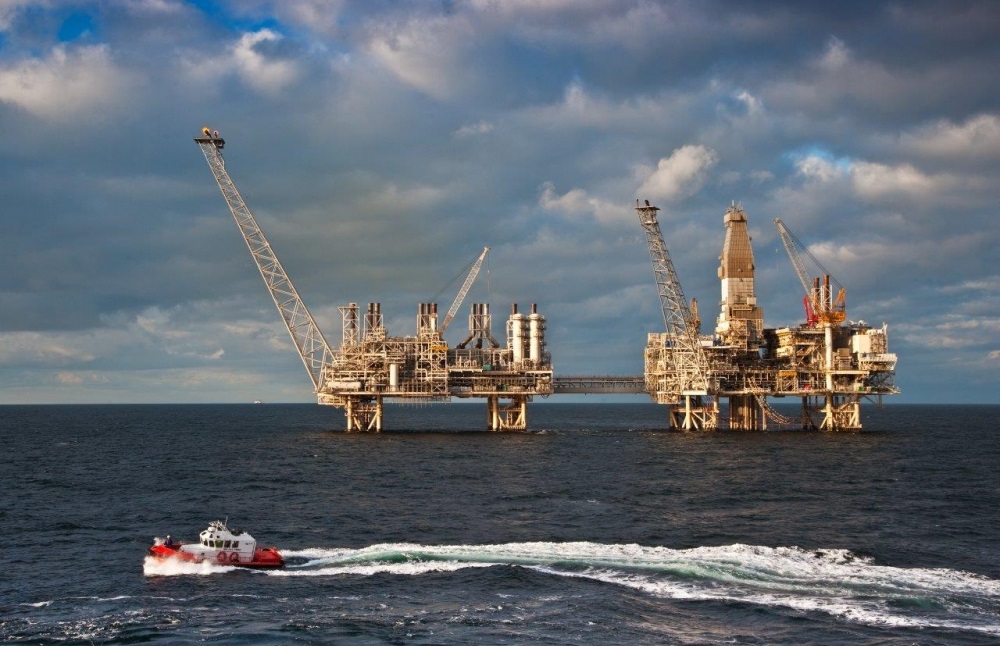
Azerbaijan, located within the South Caspian Sea Basin, is among the oldest oil producers in the world; revenue from the production and export of oil and natural gas is a mainstay of the country’s economy. Azerbaijan is one of the Caspian region’s most important strategic oil and gas export routes to the West. According to the U.S. Energy Information Administration, which updated its report on the country in early 2014, Azerbaijan’s proven crude-oil reserves are currently estimated at 7 billion barrels. In 2013, it produced 880,000 barrels per day (bpd) of oil, while consuming only 85,000 bpd.1 As to natural-gas reserves, the existence of approximately 35 trillion cubic feet (tcf) has been estimated. In 2012, Azerbaijan harvested 607 billion cubic feet (bcf) of dry natural gas, consuming 379 bcf over the same period. The country has a generating capacity of roughly 6 gigawatts.2
The first energy agreement signed between Iran and Azerbaijan came in 1992 during the premiership of Heydar Aliyev on a visit to Iran, with the aim of solving the energy problems of the Nakhchivan Autonomous Republic. According to the agreement, Iran was to build a pipeline from Khoy (a province in western Azerbaijan) to Jolfa and into Nakhchivan. By 2004, the two countries agreed to deliver gas to Nakhchivan, with Iran pledging to supply the small statelet with 1 million cubic meters (mcm) per year over the next 25 years.3
Iran’s economic relations with Azerbaijan cover natural gas, oil, electricity, commerce, customs, construction, communications and transportation. In October 1995, Azerbaijan officially invited Iran to join in the Shah Deniz oil-field development project. In 1996, Iran agreed to participate in the consortium. In late 1994, Azerbaijan bought electricity from Iran in order to meet Nakhchivan’s fuel demand. In December 2006, Iran and Azerbaijan agreed to build a hydrocarbon dam on the Aras River with the aim of being able to benefit from the river equally. Electricity from Iran began flowing into the Azerbaijan Republic, via the Astara border, on August 21, 2006.4
Omid Shokri Kalehsar, www.naturalgaseurope.com
Mr. Shokri Kalehsar is an energy analyst and a PhD candidate in international relations at Yalova University in Turkey.
The above abstract was originally published in the Middle East Policy Journal.